
The Ultimate Homeowner’s Guide to Clothes Dryer Vent Cleaning in Petersburg, FL
Many homeowners in Petersburg, Florida, enjoy the convenience of modern laundry appliances without realizing the hard work happening behind the drywall. Every time you dry a load of beach towels or light cotton shirts, your dryer expels hot, moisture-laden air through a narrow exhaust tube. Over time, tiny fibers slip past the lint trap and settle inside this pipeline. This buildup creates a stubborn bottleneck, compromising your appliance and your household safety. Professional clothes dryer vent cleaning is not just about keeping your laundry routine running smoothly; it is a fundamental part of maintaining a safe, energy-efficient home in our coastal climate.
The Hidden Dynamics of a Clogged Dryer Duct
How Airflow Restrictors Form in Coastal Environments
While lint is naturally light and airy, the atmosphere in Petersburg, FL, introduces high humidity into the mix. When warm, humid air from the Gulf of Mexico meets the damp exhaust inside your ventilation system, the suspended fibers absorb this moisture. Instead of blowing freely out of the external wall cap, the damp lint turns heavy and sticky, clinging to the ribbed interior of flexible foil transition ducts or building up along the seams of rigid metal piping. Over several months, these micro-layers compress into a thick, felt-like barrier that chokes your system’s exhaust capacity.
The Mechanical Strain on Your Dryer
A restricted vent forces your dryer to work significantly harder to push hot air out. When a clogged dryer duct restricts this flow, backpressure builds up inside the drum. The heating element or gas burner must run for extended periods to reach the necessary temperatures, which accelerates wear and tear on critical internal components. The drive belt, roller wheels, and drum seals degrade faster under these high-heat, high-resistance conditions, leading to premature appliance breakdowns and expensive repair bills.
Energy Consumption and Monthly Utility Impact
When airflow is restricted, a single cycle is rarely enough to dry a standard load of laundry. Running your dryer for two or three consecutive cycles to get your clothes dry dramatically spikes your household energy consumption. Since clothes dryers are already among the most energy-intensive appliances in a typical Florida home, running them twice as long directly inflates your monthly electric bill. Restoring proper ventilation is one of the easiest ways to bring those utility costs back down to earth.
Why Laundry Room Safety Hinges on Clean Ventilation
Understanding the Ignitibility of Dryer Lint
Dryer lint is highly flammable. It consists of microscopic fibers from cotton, polyester, and linen, which have a high surface-area-to-mass ratio. This structure allows the material to ignite quickly when exposed to high heat. If the internal temperature of your dryer spikes because the exhaust air has nowhere to go, those stray fibers can drift backward toward the heating element. Once a spark occurs inside a neglected duct, the draft can quickly carry the flame directly into your wall cavities.
The Risk of Carbon Monoxide Inhalation
For Petersburg homeowners with gas-powered dryers, a clean exhaust system is a critical safety barrier. Gas dryers produce carbon monoxide as a byproduct of combustion. Normally, this odorless, colorless gas is safely vented outside. However, if the ductwork is completely blocked, these toxic fumes can backdraft into your laundry room. Ensuring that your duct is completely clear keeps these combustion byproducts moving safely out of your living spaces.
Preventing Moisture Damage and Mold Growth
A typical load of wet laundry contains several pints of water that must be evaporated and moved out of the house. When the vent is blocked, that moisture has to escape somewhere. Often, it seeps out of the duct joints behind your walls or inside your laundry closet. This localized humidity creates a breeding ground for mold and mildew, which can damage drywall, wood framing, and paint in your laundry room. Keeping the exhaust clear ensures all that moisture safely exits your home.
Clear Signs Your Petersburg Home Needs Vent Service
It is easy to forget about your dryer exhaust because it is mostly hidden from view. However, your appliance will drop clear hints when the airflow is dropping to dangerous levels. Paying attention to these warning signs can save you from a major headache later on.
| Symptom | What It Means | Recommended Action |
|---|---|---|
| Clothes take multiple cycles to dry | Moisture cannot escape the drum, keeping clothes damp. | Inspect the vent cap and schedule a professional cleaning. |
| The dryer exterior feels burning hot | Heat is trapped inside the cabinet instead of venting outside. | Stop using the dryer immediately and check for blockages. |
| Musty smell on clean clothes | Damp air is settling back into the drum after the cycle ends. | Clean the entire duct run to remove damp lint buildup. |
| The external vent flap doesn’t open | Airflow is too weak to push the damper door open. | Clear out the physical blockage behind the external wall hood. |
Excessive Drying Times and Hot Fabrics
If a normal load of towels takes 80 to 90 minutes to dry, the system is struggling. When you pull clothes out at the end of a cycle and they feel hot to the touch but are still damp, this is a classic sign of backpressure. The heat is present, but without proper airflow, the moisture cannot evaporate. Do not ignore this sign, as running your machine continuously under these conditions can damage delicate clothing fibers and melt synthetic fabrics.
The Smell of Overheating Lint
A distinct, dusty, burning odor in your laundry room is a serious red flag. This smell indicates that the lint trapped in the lint trap housing or the transition duct is getting hot enough to scorch. If you smell scorched dust or heat when the dryer is running, turn off the appliance immediately. This is often the final warning sign before a thermal fuse trips or a small fire ignites.
Debris Around the External Vent Cap
Take a walk outside your home while the dryer is running. Inspect the exterior vent hood mounted on your siding or roof. If you see lint clinging to the outside of the louvers, or if you notice a pile of lint on the ground beneath the wall terminal, the system is overflowing. A healthy system should blow a steady stream of warm, lint-free air. If the flap remains closed or only wiggles slightly, a blockage is choking the line.
The Anatomy of a Safe and Code-Compliant Vent System
The Standard for Rigid Metal Ductwork
Modern building codes require dryer exhaust systems to be constructed of rigid metal ductwork. These ducts must have a smooth interior finish to prevent lint from catching on rough edges. Unlike flexible plastic or foil hoses, rigid aluminum or galvanized steel pipes do not collapse, kink, or pinch behind the drywall. Using rigid materials minimizes friction, allowing the damp air to move at maximum velocity out of your home.
Why Flexible Plastic and Foil Vents Pose a Threat
Many older homes in Petersburg still use flexible white vinyl or thin foil transition ducts. These materials are highly susceptible to sagging, which creates low spots where condensation and lint collect. More importantly, vinyl and foil are easily punctured and offer virtually no resistance to fire. If a spark ignites inside a plastic hose, the fire will melt through the material in seconds, spreading flames into the surrounding walls. Replacing these outdated materials is a vital step toward improving your home’s safety.
The Importance of Proper Joint Sealing
Every joint in a metal dryer duct run must be sealed properly to prevent leaks. However, you should never use standard drywall screws or sheet metal screws to connect these sections. The sharp tips of the screws penetrate the inside of the pipe, acting as tiny hooks that catch wet lint. Over time, these screws build up large clumps that block the pipe. Instead, professional installers use heavy-duty, heat-resistant foil tape to secure and seal the joints from the outside without creating internal obstructions.
What to Expect from a Professional Dryer Vent Cleaning Service
The Inspection and Diagnostics Phase
A professional service begins with a comprehensive inspection of your laundry setup. Technicians locate the exit terminal, examine the transition hose behind your dryer, and check the overall layout of the duct run. They will often measure the airflow velocity and static pressure at the exterior vent using an anemometer. This initial test provides a baseline measurement, showing exactly how restricted your system is before any work begins.
The Rotary Brush and Vacuum Extraction Process
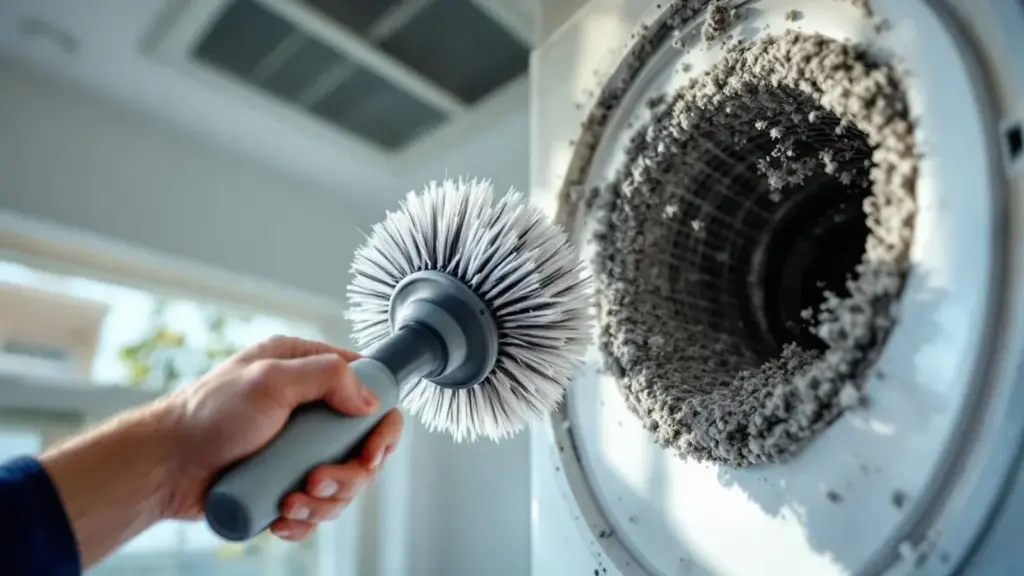
To safely remove packed lint from long, winding ducts, technicians use a specialized rotary brush system. These flexible rods are tipped with non-abrasive nylon brushes that spin rapidly as they traverse the pipe. This spinning action gently knocks loose the stubborn layers of baked-on lint without damaging the metal joints. Simultaneously, a high-powered vacuum collector pulls the loosened debris out of the duct, preventing it from blowing back into your clean laundry room.
Post-Cleaning Airflow Testing
Once the duct is swept clean from the dryer connection to the outside wall cap, the technician performs a secondary airflow test. By comparing the post-cleaning velocity to the initial measurements, they can verify that the system has returned to its original design capacity. This final check ensures that your dryer can run cool, fast, and safely, giving you total peace of mind that your home’s system is operating exactly as it should.
Local Maintenance Tips for Petersburg Homeowners
Managing High Humidity Challenges
Living in the coastal environment of Petersburg, FL, means our homes are exposed to salt air and high humidity year-round. This moisture makes routine maintenance even more critical. To offset these local conditions, make it a habit to clean your dryer’s lint screen before every single load. Every few months, take the lint screen to the sink and scrub it gently with a soft brush and warm, soapy water. This removes the invisible layer of fabric softener film that can block airflow over time.
Keeping Exterior Vents Free of Pests
Warm, dark dryer vents are incredibly attractive to local wildlife, including nesting birds, rodents, and lizards. If your exterior vent cover has damaged louvers or is missing its protective screen, these pests can quickly build nests inside the pipe, causing a complete blockage. Ensure your exterior wall hood is equipped with a clean, functional damper flap that opens easily when the dryer is on and snaps shut when it is off. Never install a fine mesh screen over a dryer vent, as it will rapidly clog with lint and create a major fire hazard.
Setting a Regular Maintenance Schedule
For a typical family in Petersburg, scheduling a professional dryer vent cleaning service once a year is the ideal standard. If you have a large family, wash multiple loads of heavy items weekly, or have pets that shed heavily, you may need to clean the system every six to nine months. Sticking to a regular maintenance schedule ensures you never have to worry about hidden lint buildup quietly compromising your utility bills or your family’s safety.
Frequently Asked Questions About Dryer Vent Care
Can I clean my dryer vent myself with a DIY kit?
While basic DIY kits are available at local hardware stores, they can be risky for longer or winding duct runs. If a flexible rod is forced around a tight 90-degree bend, it can easily snap off or puncture thin duct walls. If a brush gets stuck inside your walls, resolving the issue often requires cutting through your drywall. Professional technicians use heavy-duty, commercial-grade equipment and have the experience to navigate complex bends safely without damaging your home’s infrastructure.
How long does a standard professional cleaning take?
A standard clothes dryer vent cleaning for a single-family home typically takes between 45 to 90 minutes. The exact duration depends on the length of the duct run, its accessibility, and the volume of lint packed inside. If the duct vents through a high roofline or requires minor repairs, it may take slightly longer to complete the service safely and thoroughly.
How do I know if my dryer vent goes to the roof or the wall?
You can usually determine this by examining the layout of your laundry room. If your dryer sits against an exterior wall, the vent likely runs straight through to a wall hood outside. If your laundry room is located in the interior of your home, the ductwork probably runs vertically through the ceiling and vents out through a specialized roof cap. Roof-vented systems are highly susceptible to lint accumulation because the dryer must push the air upward against gravity, making regular cleanings especially critical.
Will cleaning the vent make my dryer last longer?
Yes, absolutely. Keeping the exhaust clear prevents the internal components of your dryer from overheating and burning out. By reducing the run time of each cycle and lowering the operating temperature inside the cabinet, you significantly extend the lifespan of the heating element, thermal fuses, and motor. Routine maintenance is a highly cost-effective way to protect your investment in your laundry appliances.
Protect Your Home and Family with Professional Care
Maintaining a safe and efficient home in the unique climate of Petersburg, FL, requires paying attention to the details behind your walls. Keeping your dryer ventilation clear is one of the most effective ways to lower your utility bills, protect your appliance, and ensure complete peace of mind for your family. If you suspect your dryer vent is overdue for a thorough cleaning, the certified team at Ecovent Dryer Duct Solutions is here to help with specialized tools and local expertise. Contact us today to schedule your dryer vent cleaning and ensure your home stays safe, efficient, and lint-free.