
What to Expect During a Professional Dryer Vent Cleaning in St. Petersburg, FL
Most St. Petersburg homeowners know they should have their dryer vent cleaned, but very few know what actually happens during the appointment. That uncertainty is enough to make people put it off for months, sometimes years. This guide walks you through every stage of a professional dryer duct cleaning service, from the phone call to the final inspection, so there are no surprises on the day.
Why St. Petersburg Homes Need Routine Dryer Vent Service
Florida’s Climate Creates Unique Lint Buildup Conditions
High humidity is the norm in St. Petersburg, and that moisture does something most homeowners overlook: it causes lint to clump and stick to the interior walls of the vent duct rather than blowing freely out the exhaust cap. A dry climate might allow loose lint to exit on its own over time. Here, it compresses into dense layers that restrict airflow progressively. The result is a dryer that runs longer, uses more energy, and eventually overheats.
Longer duct runs, which are common in Florida slab-construction homes where the laundry room sits far from an exterior wall, compound the problem. Every additional foot of duct and every elbow fitting gives lint another surface to cling to.
The Difference Between a Clogged Vent and a Dirty Filter
Cleaning the lint trap after every load is good practice, but the trap only catches a portion of the lint your dryer generates. The rest travels into the duct itself. Over a year or two of regular use, that accumulation inside the duct can become substantial, even in a household that is diligent about the trap. A professional clothes dryer vent cleaning addresses the duct system the lint trap never touches.
Signs Your Vent Is Overdue for Attention
You do not always need to wait for a dramatic warning sign. These are the most common indicators St. Petersburg homeowners notice before scheduling service:
- Clothes, especially towels and jeans, take two cycles to dry fully.
- The dryer cabinet or laundry room feels noticeably hot during a cycle.
- A burning or musty smell appears during operation.
- The exterior exhaust flap barely moves or stays closed while the dryer runs.
- Visible lint accumulating around the dryer or near the exterior vent hood.
Before the Technician Arrives: What You Should Do
Locating Your Exterior Exhaust Cap
Before the appointment, spend two minutes finding the exterior vent cap on the outside of your home. It is typically a louvered or flap-style fitting mounted on an exterior wall, soffit, or sometimes the roof. Knowing where it is helps the technician work efficiently and gives you a reference point for the final airflow check. If the cap is on the roof or in a difficult-to-access area, mention that when you schedule so the technician brings the right equipment.
Clearing the Area Around the Dryer
The technician will need to move the dryer away from the wall to access the duct connection at the back of the machine. Clear any items stored on top of or directly beside the dryer. If your laundry room is tight, moving a laundry basket or a small shelf takes less than five minutes and makes the job go much faster.
What You Do Not Need to Do
You do not need to pre-clean anything, disconnect the dryer yourself, or purchase any supplies. A professional dryer duct cleaning service arrives fully equipped. Attempting to loosen the duct connection yourself, especially on gas dryers, is a task best left to the technician. Just make sure the area is accessible and the dryer has been off for at least a few minutes before the appointment.
The Step-by-Step Process on Appointment Day
Step 1: Initial Assessment and Duct Mapping
The appointment at Ecovent Dryer Duct Solutions begins with a visual inspection, not immediately with equipment. The technician checks the duct connection at the back of the dryer, traces the duct path through the wall or ceiling, and identifies the exterior termination point. This mapping step matters because duct routing varies significantly from home to home across St. Petersburg, from short straight runs to long multi-elbow paths that travel through attic spaces.
During the assessment, the technician also notes the duct material. Flexible foil or plastic accordion duct, which is common in older installations, is a known lint trap because its ridged interior catches debris far more readily than smooth rigid metal duct. If your home still has flexible plastic duct, the technician will flag this as a condition worth addressing.
Step 2: Disconnecting the Dryer and Accessing the Duct
With the assessment complete, the technician carefully pulls the dryer away from the wall and disconnects the duct from the machine’s exhaust port. For electric dryers, this is straightforward. For gas dryers, the technician takes additional care not to disturb the gas supply line, which should only ever be disconnected by a licensed professional if it actually needs to come apart. In most cases, there is enough slack to work without touching the gas connection at all.
The technician also inspects the first foot or two of duct visible at the connection point. This section often holds the heaviest concentration of lint because it sits closest to the warm, moist exhaust air leaving the drum.
If you want it handled correctly the first time, consider professional breathe easy with professional dryer vent cleaning in Petersburg 33709.
Step 3: Rotary Brush Cleaning and High-Powered Vacuuming
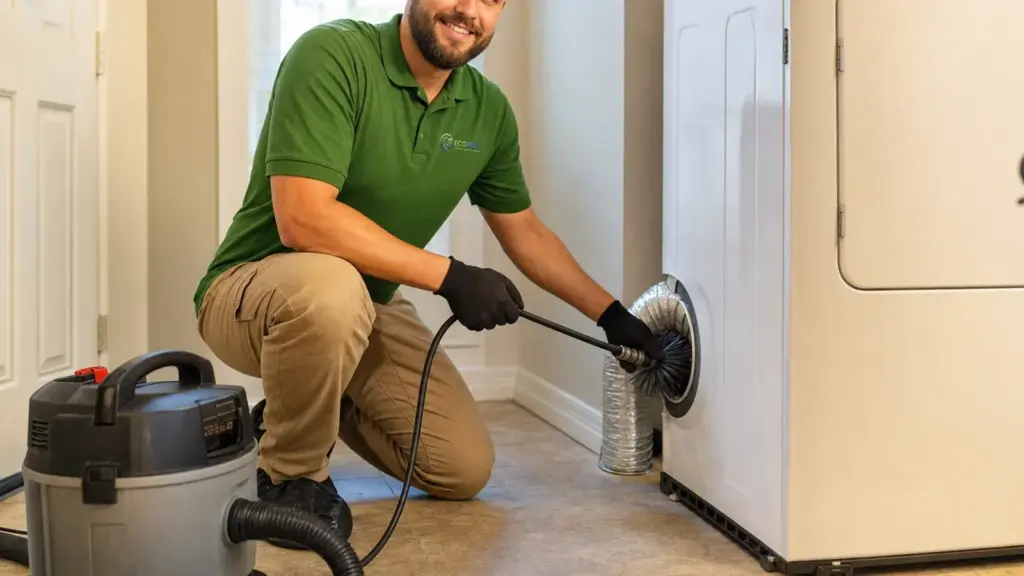
This is the core of the service. The technician inserts a flexible rotary brush system into the duct and works it through the full length of the run. The spinning brush dislodges lint that has compacted against the duct walls over months or years. Simultaneously, a high-powered vacuum captures the loosened debris so it does not scatter into your laundry room.
On longer or more complex duct runs, the technician may work from both ends, entering from the dryer side and also from the exterior cap, to ensure the entire path is cleared. The duration of this step depends on duct length and how much buildup is present. A typical St. Petersburg home with a moderate amount of lint accumulation takes roughly 30 to 45 minutes for the cleaning itself.
Step 4: Inspecting and Cleaning the Exterior Vent Cap
The exterior exhaust cap is inspected and cleaned as part of every visit. Lint buildup at the cap is common, and the flap or louvers can become stuck in a partially closed position, which restricts airflow even after the duct interior is clean. Bird nests and insect debris are also found at exterior caps in Florida more often than homeowners expect, particularly in spring and fall.
If the cap is damaged, corroded, or has a screen mesh on the interior (which catches lint and creates a fire hazard), the technician will note it. Replacing a deteriorated cap is a straightforward fix that makes a meaningful difference in how well the system exhausts.
Step 5: Reconnecting the Dryer and Running a Live Airflow Test
Once the duct is clean, the technician reconnects it to the dryer using proper fittings and, where applicable, foil tape rated for dryer exhaust. The dryer is pushed back into position and powered on. The technician then checks the exterior cap while the dryer runs to confirm strong, unobstructed airflow. This live test is the most reliable confirmation that the cleaning was effective. You should be able to feel a clear, steady stream of warm air at the exterior cap, and the flap or louvers should open fully.
Step 6: Final Report and Recommendations
Before leaving, the technician walks you through what was found. This includes the approximate amount of lint removed, the condition of the duct material, any fittings that showed wear, and whether the duct routing itself could be improved. Ecovent Dryer Duct Solutions serves homeowners across St. Petersburg, and the technician can speak specifically to common configurations in your area and what tends to cause problems over time.
If the duct material is flexible accordion-style plastic, the technician may recommend upgrading to rigid or semi-rigid aluminum duct. This is not a pressure tactic. Smooth-walled metal duct simply accumulates lint more slowly and is the type specified by most dryer manufacturers and building standards. You can decide whether to address it immediately or plan for it later.
One Thing Most Homeowners Get Wrong About Vent Cleaning Frequency
The common advice is to clean the dryer vent once a year. That is a reasonable baseline, but it is not a universal rule. Several factors push the interval shorter for many St. Petersburg households.
Household Factors That Increase Lint Production
- Large families or high laundry volume: A household doing eight to ten loads per week accumulates lint far faster than one doing three.
- Pets: Animal hair and dander pass through the lint trap and into the duct in significant quantities.
- Towels, bedding, and fleece: These fabrics shed considerably more fiber than light clothing.
- Long or complex duct runs: More elbows and greater duct length mean more surface area for lint to settle.
How to Read Your Dryer’s Performance as a Guide
Rather than relying solely on a calendar, pay attention to how your dryer performs. If a full load of towels that used to dry in one 45-minute cycle starts consistently needing a second cycle, that is a more reliable signal than a date on the calendar. The dryer is telling you airflow has degraded. Waiting for the annual appointment when the machine is already struggling means months of wasted energy and unnecessary heat stress on the appliance.
What a Professional Service Covers That DIY Cannot
Reach and Equipment
Consumer-grade dryer vent cleaning kits, the brush-and-rod sets sold at hardware stores, are designed for short, straight duct runs. They are useful for light maintenance on simple installations. They cannot adequately clean a duct that runs 15 or 20 feet through a wall, makes two or three turns, and terminates on a roof. The rotary brush systems used by professional dryer duct cleaning services are longer, more flexible, and paired with vacuum systems powerful enough to capture debris throughout the full run rather than just pushing it further in.
Identifying Problems Beyond Lint
A professional visit surfaces issues that a homeowner cleaning their own duct would miss entirely. Disconnected duct sections inside a wall, crushed flexible duct behind the dryer, a missing exterior cap, or a duct that was incorrectly routed during installation are all conditions that affect performance and safety. These are found and documented during a professional inspection. Knowing about a disconnected duct joint, for example, is information that prevents a much larger problem later.
Peace of Mind After the Job
After a professional clothes dryer vent cleaning, you have a documented record of service and a confirmed airflow test. That is worth something beyond the immediate performance improvement. It matters for insurance purposes, for home sale disclosures, and simply for knowing the system has been properly maintained.
Comparing DIY Cleaning vs. Professional Service
Many Petersburg 33709 homeowners rely on expert breathe easy with professional dryer vent cleaning in Petersburg 33709 for exactly this.
| Factor | DIY Brush Kit | Professional Service |
|---|---|---|
| Effective duct length | Up to ~12 feet, straight runs | Full run, including bends and turns |
| Debris capture | Partial (may push lint inward) | High-powered vacuum removes debris completely |
| Exterior cap inspection | Rarely addressed | Included in every visit |
| Duct condition assessment | Not performed | Full visual inspection and report |
| Live airflow test | Not performed | Confirmed before technician leaves |
| Identifies installation issues | No | Yes, flagged with recommendations |
Booking Your Appointment with Ecovent Dryer Duct Solutions
What to Have Ready When You Call
When you contact Ecovent Dryer Duct Solutions to schedule, a few pieces of information help the team prepare. Know whether your dryer is gas or electric, have a rough sense of where the exterior exhaust cap is located (wall, soffit, or roof), and mention if the laundry room has any access constraints. If you have had the vent cleaned before and remember when, that is helpful context too, though not required.
How Long the Appointment Takes
For a standard residential dryer vent cleaning in St. Petersburg, plan for approximately one to one-and-a-half hours from arrival to completion. Longer duct runs, heavily clogged systems, or additional work like exterior cap replacement may extend that. The technician will give you a realistic time estimate once the initial assessment is done.
After the Service: Keeping the System Clean Longer
A few simple habits extend the interval between professional cleanings. Clean the lint trap before every load, not just after. Avoid using the dryer for items that are still soaking wet rather than spun dry, since excess moisture carries more lint into the duct. Periodically check the exterior cap from outside to confirm the flap opens freely when the dryer runs. And if you notice performance declining before your next scheduled service, call rather than waiting. Catching a partial blockage early is always easier than clearing a fully compacted duct.
If you want to learn more about how regular maintenance protects your appliance and your home, {{BLOG_URL|explore our other dryer vent maintenance guides}} for deeper coverage on related topics.
Frequently Asked Questions
How long does a dryer vent cleaning appointment take in St. Petersburg?
Most standard residential appointments take between one and one-and-a-half hours, including the initial assessment, the cleaning itself, reconnection, and the live airflow test. Complex duct runs or heavily clogged systems may take a bit longer.
Do I need to be home during the service?
Yes. The technician needs access to the laundry room and, in most cases, the exterior of the home to inspect and clean the exhaust cap. Someone should be present for the full appointment so the technician can walk you through findings at the end.
Can a dryer vent cleaning damage my dryer or duct?
A professional service uses equipment and techniques designed for residential duct systems. The rotary brushes and vacuum systems are sized for standard duct diameters. The technician inspects the duct condition before cleaning and adjusts the approach accordingly, so there is no risk to an intact duct system.
How often should St. Petersburg homeowners schedule dryer vent cleaning?
Once a year is a common baseline, but households with high laundry volume, pets, or long duct runs often benefit from service every six to eight months. Watching your dryer’s performance is the most practical guide: if drying times are increasing, the vent likely needs attention sooner.
Is there anything I should do to prepare before the technician arrives?
Clear the area around and on top of the dryer, locate your exterior exhaust cap if you can, and make sure the dryer has been off for a few minutes. That is all that is needed. The technician brings every tool and supply required for the job.
What happens if the technician finds a bigger problem, like a disconnected duct section?
The technician documents the issue and explains it clearly before any additional work is discussed. You will know exactly what was found, where it is, and what the options are. No additional work is performed without your approval.
Conclusion
A professional dryer vent cleaning in St. Petersburg is a straightforward, well-defined service with a clear beginning, middle, and end. There is nothing mysterious about it once you know what to expect, and the result, a fully cleared duct, a confirmed airflow test, and a documented inspection, is worth the time. If your dryer has been running longer than it should or you cannot remember the last time the vent was serviced, now is a good time to address it. Schedule your dryer vent cleaning with Ecovent Dryer Duct Solutions and get a thorough, professional service from a team that knows St. Petersburg homes.