
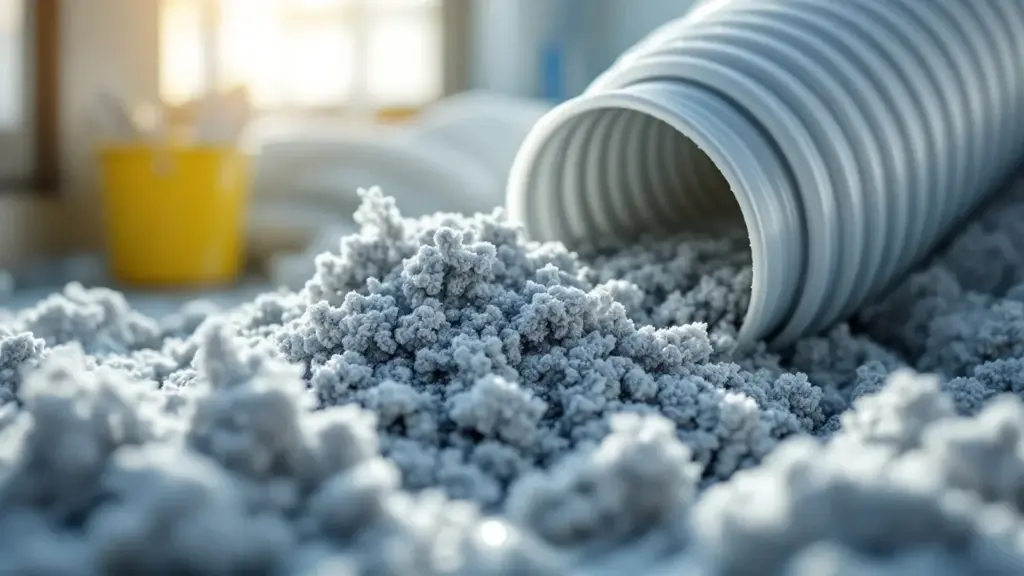
Why St. Petersburg Humidity is One of the Leading Dryer Lint Buildup Causes
Relative humidity in coastal Pinellas County averages over 70 percent year-round, creating a unique environmental challenge inside local laundry rooms. When damp, salty air from the Gulf of Mexico meets the hot, moisture-laden exhaust of a laundry cycle, it fundamentally alters how debris behaves inside your exhaust system. Instead of drifting freely out to the external terminal, fibers become heavy, damp, and highly adhesive. Understanding these mechanics is essential for maintaining home safety and appliance efficiency in our tropical climate.
How Does High Local Humidity Accelerate Dryer Lint Buildup Causes?
Under dry conditions, lint is light, fluffy, and easily pushed out of the exhaust system by the dryer blower fan. However, when the ambient air entering your home is highly humid, the air entering the dryer drum is already saturated with water vapor. As the system heats up and draws moisture out of your wet clothes, the exhaust stream reaches a state of extreme moisture saturation.
When this warm, wet air enters the cooler stretches of your exhaust pipe, particularly sections running through air-conditioned wall cavities or uninsulated crawlspaces, a rapid condensation effect occurs. Liquid water beads along the interior metal walls of the duct. As dry fibers pass through this damp pipeline, they stick to the wet metal surfaces like paper-mache. This damp accumulation creates a sticky foundation that traps every subsequent fiber, accelerating the rate of restriction far faster than in arid geographic regions.
Why Does Coastal Air Make Dryer Lint Sticky?
The air in St. Petersburg is not just humid, it is also laden with microscopic salt particles from nearby waters like Tampa Bay and the Gulf. This saline moisture has a natural hygroscopic quality, meaning it actively attracts and retains water molecules from its surroundings.
When salt-tinged air is pulled into your laundry system, the moisture does not evaporate cleanly. Instead, it forms a tacky, semi-liquid residue when mixed with detergent residues and fabric softeners. As you run cycles, this sticky mixture binds the loose cotton and synthetic fibers together, turning what should be a dusty powder into a dense, clay-like sludge. Over time, this sludge hardens as the duct cools between cycles, creating a durable, layered obstruction that resists the natural airflow of the appliance.
What Role Do Long and Complex Duct Runs Play in Wet Climates?
In many modern local homes, laundry rooms are situated in the center of the house rather than against an exterior wall. This layout requires long duct pathways that wind through joists, turn corners, or travel vertically to vent through the roof. In our humid climate, these complex pathways are highly vulnerable to premature clogging.
If you want it handled correctly the first time, consider professional dryer vent cleaning cost factors st petersburg 2 in Petersburg 33709.
Every elbow, turn, and foot of ducting creates friction, which slows down the velocity of the exhaust air. When hot, humid air slows down, it cools rapidly. This drop in temperature triggers massive condensation inside the pipe. Without sufficient air velocity to push the heavy, damp fibers up and out, gravity pulls the wet mass down into low spots, vertical drops, and elbows. This is why addressing intricate routing layouts is a critical component of professional dryer vent cleaning st petersburg fl to ensure structural safety and restore proper airflow velocity.
How Does Local Housing Architecture Affect Condensation?
St. Petersburg features a diverse mix of housing stock, from mid-century block homes in Old Northeast to elevated waterfront homes and multi-story concrete condominiums. Each of these building styles presents unique thermal dynamics that directly contribute to condensation inside your exhaust system.
In older concrete block homes, dryer ducts often run through unconditioned crawl spaces or directly under concrete slab floors where temperatures remain cool and damp. When hot, moist exhaust air hits these chilled underground or under-floor pipes, instant condensation occurs, gluing lint to the bottom of the line. Conversely, in elevated coastal homes, ducts are often exposed to salt air underneath the structure, speeding up metal corrosion and creating rough interior surfaces that snag passing fibers. Modern multi-family buildings often feature incredibly long horizontal runs that lack the thermal insulation needed to prevent temperature drops, causing moisture to pool mid-run and form thick blockages.
What are the Warning Signs that Moisture is Trapping Lint in Your System?
When moisture begins to actively trap debris inside your exhaust system, your laundry setup will begin displaying distinct physical warnings. Recognizing these early signs can help you address the issue before it leads to a complete system breakdown or a thermal hazard.
Common signs of a moisture-locked clog include:
Many Petersburg 33709 homeowners rely on expert dryer vent cleaning cost factors st petersburg 2 in Petersburg 33709 for exactly this.
- Clothes taking multiple cycles to dry completely, even with small loads.
- A musty, damp smell inside the dryer drum or laundry area that persists after cycles.
- The top or sides of the dryer cabinet feeling excessively hot to the touch during operation.
- Water droplets or dark, damp stains forming on the wall behind the dryer or around the exterior vent hood.
- A visible lack of flap movement at the external vent termination point while the appliance is running.
If you observe these symptoms, you can read our guide on signs a dryer duct is clogged to better understand the severity of the airflow restriction.
Why is a Damp Clog More Dangerous Than a Dry Clog?
While all exhaust restrictions are problematic, a damp, humid clog poses unique hazards to your home. First, wet lint is significantly heavier than dry debris. As it accumulates in horizontal runs, the sheer weight can cause flexible foil transitions to sag, creating low points where water pools, or even causing the duct joints to pull apart completely behind your walls.
Furthermore, damp organic fibers mixed with dark, warm, and poorly ventilated environments create the perfect breeding ground for biological growth. Mold and mildew can quickly colonize a damp clog, releasing musty odors back into your living space every time the dryer runs. Finally, because the damp mass restricts airflow so severely, it causes the dryer’s thermal limit switches to work under extreme stress. If the appliance overheats repeatedly, the risk of an electrical or mechanical ignition increases, making routine dryer duct cleaning a vital home safety task.
How Often Should St. Petersburg Homes Receive Dryer Vent Cleaning?
Due to the relentless humidity of our coastal environment, standard national recommendations do not always fit local conditions. While inland or drier climates might safely manage with biennial maintenance, local properties generally require more frequent attention to prevent heavy buildup.
For a typical household in our area, professional dryer vent cleaning should be performed at least once a year. If you have a large family, pet owners who wash bulky bedding frequently, or a complex duct system that routes to the roof, semi-annual service is highly recommended. Regular maintenance ensures that sticky, salt-and-moisture-laden blockages are cleared out before they can harden into dense, airflow-restricting obstructions that damage your appliance and drive up utility costs.
Ready for the next step? Learn how dryer vent cleaning cost factors st petersburg 2 services in Petersburg 33709 can help and reach out to the team.
What Steps Can Homeowners Take to Minimize Damp Lint Accumulation?
While you cannot control the outdoor Florida climate, there are several practical habits you can adopt to reduce moisture accumulation and slow down the rate of debris buildup in your system between professional cleanings.
First, always ensure your laundry room has adequate ventilation; running a bath fan or ceiling fan can help circulate humid air out of the utility space. Second, avoid overloading the dryer, as over-packed drums release massive bursts of wet air that the exhaust line cannot clear quickly enough. Third, clean your primary lint screen thoroughly before every single load to catch as many loose fibers as possible at the source. For more detailed practical tips on managing your laundry system in our climate, check out our guide on how to keep your dryer vent clear in Florida.
How Do Professionals Clear Wet, Sticky Obstructions?
A simple brush or a consumer-grade vacuum attachment is rarely effective against the damp, clay-like debris found in local exhaust lines. These basic tools often simply pack the wet mass tighter, turning a partial restriction into a solid, impenetrable plug deep inside the wall.
Professional technicians utilize specialized high-velocity reverse-spinning air whips and heavy-duty, flexible rotary rods designed to scrape the sticky layers off the duct walls without puncturing the metal. High-volume air movers are deployed to extract the heavy, damp debris safely out of the home, ensuring the entire length of the line is restored to its original diameter. This comprehensive approach is essential for restoring proper static pressure and keeping your laundry system running safely and efficiently in our unique coastal environment.
Do not let high Gulf humidity compromise your home’s safety and appliance efficiency. If you notice your clothes are taking longer to dry or your laundry room feels unusually humid, contact Ecovent Dryer Duct Solutions in St. Petersburg, FL to schedule a comprehensive inspection and professional duct cleaning today.