
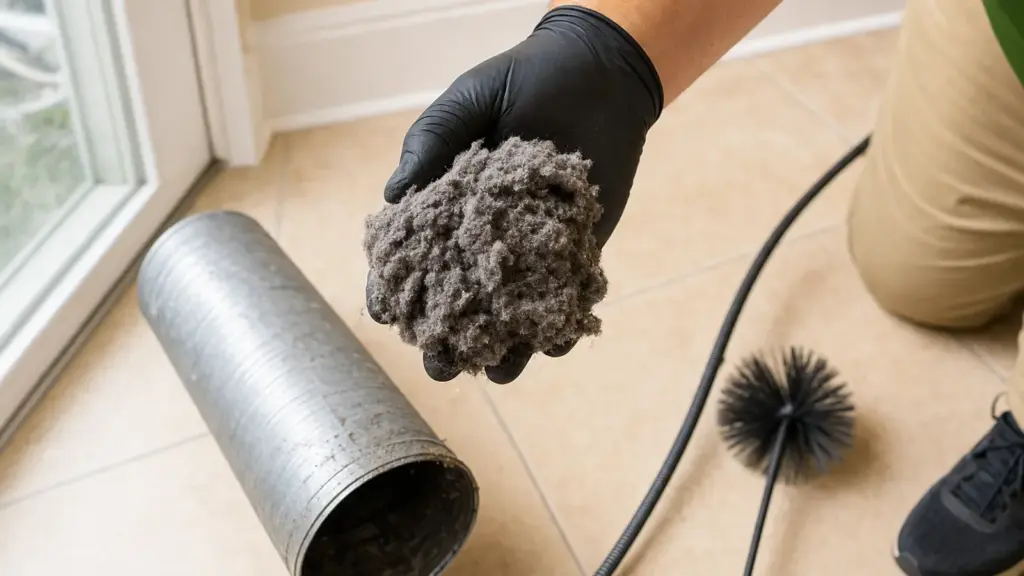
Why St. Petersburg Humidity Causes Fast Lint Buildup: Myths Busted
Dryer fires account for tens of thousands of home fires in the United States each year, and a clogged vent is the leading contributing factor, according to the U.S. Fire Administration. What most St. Petersburg homeowners don’t realize is that the city’s coastal humidity doesn’t just make summer feel brutal, it actively speeds up the lint-clogging process inside dryer ducts. That combination of subtropical moisture and the long, complex vertical duct runs common in the area’s newer two-story homes creates conditions that accelerate buildup faster than in drier climates. And yet, a surprising amount of misinformation circulates about how lint actually accumulates, what humidity does to it, and whether any of it really matters. This article works through the most common myths, one by one, and replaces them with what’s actually happening inside your ductwork.
Myth: Humidity Has Nothing to Do With Lint Buildup in Your Dryer Vent
Reality: Humidity changes the physical character of lint itself. Lint is not a dry, weightless powder that floats freely through a duct and exits at the wall cap without incident. It is a fibrous material shed from fabric, and when the air surrounding it carries significant moisture, those fibers become sticky and cohesive. In St. Petersburg, where relative humidity regularly climbs above 80 percent during summer months and rarely drops to truly dry levels even in winter, lint inside a duct behaves more like wet paper than dry fluff. It clings to duct walls, bends, and joints instead of passing through. Over time, those sticky layers compress and harden, forming dense deposits that restrict airflow far more aggressively than the same amount of dry lint would in an inland climate. The Gulf Coast environment is not a minor variable; it is one of the primary reasons dryer duct cleaning needs to happen more frequently here than the general advice written for national audiences suggests.
Myth: If Your Lint Trap Is Clean, Your Vent Is Fine
Reality: The lint trap catches a portion of the fibers released during a drying cycle, but it was never designed to intercept everything. Fine particles, particularly from synthetic fabrics and microfibers, pass through the screen mesh and travel into the exhaust duct. In a humid environment like St. Petersburg, those fine particles are even more likely to adhere to duct surfaces because the moisture in the exhaust air keeps them tacky as they travel. Cleaning the lint trap after every load is genuinely good practice and reduces the volume of material entering the duct, but it does not substitute for periodic professional cleaning of the duct itself. Homeowners who clean their traps religiously sometimes feel a false sense of security and delay scheduling a dryer duct cleaning longer than they should. The two tasks address different parts of the same system.
Myth: Short Vents Don’t Need Cleaning as Often in Florida
Reality: Duct length is one factor in how quickly buildup occurs, but in a high-humidity market like St. Petersburg, it is not the only factor, and shorter ducts are not immune. Moisture-laden lint can begin adhering within the first few feet of ductwork, especially near the dryer’s exhaust collar where warm, moist air first contacts the cooler duct wall. That temperature differential causes condensation, and condensation gives lint something to grip. Where this myth causes the most real-world harm is in townhomes and condos across St. Petersburg, where ducts may be relatively short but routed through shared walls or ceiling chases with multiple elbows. Each elbow is a collection point. A short duct with three or four bends can accumulate a problematic restriction faster than a longer straight run. For a closer look at how these specific building configurations create risk, see the warning signs homeowners in Florida-style construction often miss.
Myth: Upstairs Laundry Rooms Are Convenient, Not Riskier
If you want it handled correctly the first time, consider professional breathe easy with professional dryer vent cleaning in Petersburg 33709.
Reality: Second-floor laundry rooms have become standard in many of the newer subdivisions and townhome developments built across St. Petersburg and the broader Pinellas County area over the past two decades. Builders favor them because they keep laundry close to bedrooms, reducing the distance residents carry clothes. From a dryer vent standpoint, however, a second-floor laundry room means the exhaust duct must travel vertically, often ten feet or more, before reaching an exterior wall cap or a roof termination. Vertical runs fight gravity. Lint-laden air moving upward loses velocity compared to a horizontal run, and slower-moving air deposits more lint along the duct walls. Add St. Petersburg’s humidity, and those deposits become dense and sticky much faster than a homeowner would expect. Professional clothes dryer vent cleaning is specifically designed to address the full length of these complex vertical runs using equipment that reaches and clears what a brush kit from a hardware store simply cannot.
Myth: You’d Know If Your Dryer Vent Was Dangerously Clogged
Reality: Significant restriction can build up gradually, and gradual changes are easy to normalize. A dryer that once finished a load in 35 minutes now takes 55, but the household adjusts to starting laundry earlier and never consciously registers the change as a warning sign. Clothes that come out slightly damp get run through a second cycle, which feels like a dryer performance issue rather than a vent issue. The exterior vent cap flap that used to open visibly during operation now barely moves, but it’s on the back of the house and rarely checked. In St. Petersburg’s climate, the lint compaction process is quiet and steady. By the time a vent is severely restricted, the lint mass inside may be dense enough that the dryer’s thermal fuse is cycling on and off to prevent overheating, a situation the appliance was designed to handle as a last resort, not a routine operating condition. Waiting for an obvious signal is not a reliable safety strategy. If you’re unsure what early indicators actually look like, this guide to recognizing a clogged dryer vent in Florida covers the subtler ones worth checking now.
Myth: Any Dryer Vent Cleaning Service Gets the Same Result
Reality: The difference between a thorough cleaning and a superficial one often comes down to equipment reach and technique. For a straight, short duct, a basic rotary brush can do an adequate job. For the longer, vertical, multi-elbow runs that are common in St. Petersburg’s two-story homes and multi-unit buildings, the cleaning process needs to address the entire duct length, including the sections inside walls and ceiling chases that are not visible. Compressed air systems, high-powered vacuums, and flexible rotary tools designed for longer runs are what actually clear compacted, moisture-hardened lint from those hidden sections. A technician who only cleans the accessible portion near the dryer leaves the problem sections untouched. Before scheduling service, it’s reasonable to ask what equipment will be used and whether the technician will inspect the full duct path, including the exterior termination. Questions to ask before a dryer vent inspection can help you go into that conversation prepared.
Myth: Annual Cleaning Is Overkill for Most Homes
Many Petersburg 33709 homeowners rely on expert breathe easy with professional dryer vent cleaning in Petersburg 33709 for exactly this.
Reality: Annual cleaning is a reasonable baseline recommendation for average usage in a moderate climate. St. Petersburg is not a moderate climate, and many households here are not average users. A household that runs four or more loads per week in a home with a second-floor laundry room, a vertical duct run, and the area’s characteristic humidity is operating under conditions that accelerate lint accumulation on multiple fronts simultaneously. In those circumstances, annual cleaning may actually be the minimum rather than the cautious end of the spectrum. Households with gas dryers, which produce more moisture in the exhaust stream than electric models, may see buildup develop even faster. The honest answer is that cleaning frequency should be based on an actual inspection of your specific duct, not a generic calendar rule. A technician who can measure airflow and examine the duct interior can give you a realistic interval based on your home’s actual conditions rather than a national average.
Myth: Flexible Foil Duct Is Fine for Long Runs
Reality: Flexible foil or plastic accordion-style duct is inexpensive and easy to install, which is why it sometimes ends up in homes, but it is not appropriate for long or complex duct runs. The corrugated interior surface of flexible duct creates turbulence in the exhaust airflow and gives lint far more surface area to grip compared to smooth rigid metal duct. In a humid environment, that textured surface becomes a lint trap along the entire length of the duct rather than just at bends and joints. Current building codes in most jurisdictions require rigid or semi-rigid metal duct for dryer exhaust, and requirements vary by area, so checking with a licensed professional about what applies to your specific home is always the right step. If your home has flexible foil duct running through a wall chase or ceiling, that is worth discussing with a technician during a cleaning or inspection visit. The duct material question is a separate issue from cleaning frequency, but the two are connected: the wrong material makes the humidity problem significantly worse.
Frequently Asked Questions
How does St. Petersburg’s humidity make lint buildup worse compared to other cities?
Coastal humidity keeps lint fibers moist and sticky rather than dry and loose. In St. Petersburg’s subtropical climate, the air inside a dryer duct carries enough ambient moisture that lint adheres to duct walls more aggressively and compresses into denser deposits over a shorter period of time than it would in a drier inland city. That stickiness is the core reason cleaning intervals that work elsewhere may not be adequate here.
My dryer is only two years old. Do I really need dryer duct cleaning already?
Appliance age is not the primary factor; duct conditions and usage patterns are. A two-year-old dryer in a St. Petersburg home with a second-floor laundry room, a vertical duct run, and regular use can have meaningful lint accumulation well before the five-year mark that some generic guidelines suggest. If you have not had the duct inspected since installation, it is worth scheduling a check, particularly if drying times have increased or the exterior vent cap does not open fully during operation.
Can I clean my dryer vent myself with a kit from the hardware store?
For very short, straight, accessible runs, a consumer brush kit can remove surface-level lint near the dryer connection. For the longer vertical runs common in St. Petersburg’s two-story homes, those kits typically cannot reach the full duct length or clear compacted, moisture-hardened deposits. Professional equipment is designed for the reach and suction needed to clean the complete duct path, including sections inside walls and ceiling chases.
Ready for the next step? Learn how breathe easy with professional dryer vent cleaning services in Petersburg 33709 can help and reach out to the team.
What should I do between professional cleanings to slow lint buildup?
Clean the lint trap after every single load, check the exterior vent cap periodically to confirm it opens freely during operation, and avoid overloading the dryer, which increases the volume of lint shed per cycle. These habits reduce the rate of buildup but do not eliminate the need for periodic professional cleaning, especially given St. Petersburg’s humidity levels.
How do I know if my dryer duct material is the right type for my home?
A technician performing a cleaning or inspection can assess the duct material and configuration during the visit. Requirements vary by jurisdiction, so a licensed professional familiar with local building standards is the right resource for determining whether your current setup meets current expectations and what, if anything, should be addressed.
The Bottom Line for St. Petersburg Homeowners
The myths around dryer vent lint buildup share a common thread: they treat the dryer vent as a simple, self-managing system that only needs attention when something obviously goes wrong. In St. Petersburg, the combination of coastal humidity, the prevalence of two-story homes with long vertical duct runs, and the steady pace of lint accumulation from regular laundry use makes that assumption genuinely risky. Lint that is sticky, compacted, and hidden inside a wall chase does not announce itself until a dryer stops working efficiently or, in the worst cases, until there is a fire.
Understanding what actually happens inside your ductwork is the first step. The second is acting on it with a professional cleaning that covers the full duct path, not just the section you can see. For a complete picture of what that service involves and why it matters specifically for homes with upstairs laundry rooms, see our full guide to professional dryer vent cleaning in St. Petersburg. If you’re also thinking about what questions to ask before you book, preparing for a dryer vent inspection is a practical next read.
Ecovent Dryer Duct Solutions serves St. Petersburg and the surrounding Pinellas County area. Reach out to schedule a duct inspection or cleaning, and get a clear picture of what’s actually happening inside your home’s dryer exhaust system.