
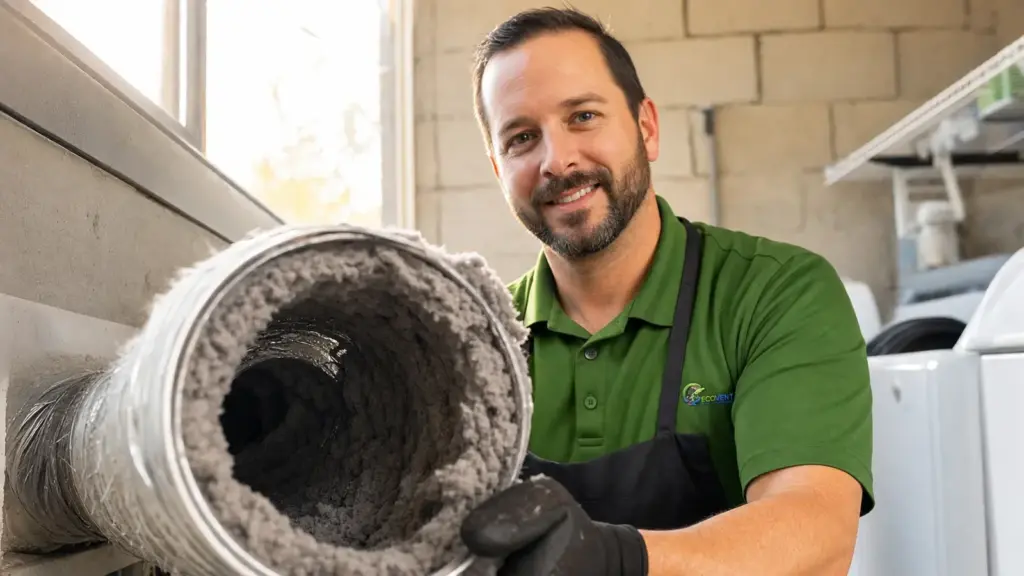
Preventing Clothes Dryer Fires in St. Petersburg and Pinellas County
What actually causes most residential dryer fires? Lint buildup inside the vent duct is the answer, and it is a problem that quietly worsens with every load of laundry in St. Petersburg and Pinellas County homes. The good news is that the risk is largely preventable with the right habits and professional service at the right intervals. This checklist walks you through exactly what to watch for and what to do about it.
Understand Why Lint Is a Fire Hazard
- Recognize that lint is highly combustible, and even a thin layer coating the inside of a duct can ignite when exhaust temperatures spike.
- Understand that restricted airflow forces the dryer to run hotter and longer, increasing the chance that lint reaches its ignition point.
- Know that the fire risk is not limited to the lint trap, because the majority of dangerous buildup accumulates inside the duct run behind the wall, not in the screen you clean after every load.
- Appreciate that longer duct runs, which are common in Pinellas County townhomes and multi-story homes, trap lint at bends and elbows where airflow slows.
- Note that flexible accordion-style ducting (the ribbed foil or plastic type) catches lint at every ridge, making it far more fire-prone than smooth rigid metal duct.
Spot the Warning Signs Before a Fire Starts
- Check whether clothes take more than one cycle to dry fully, which is one of the earliest and most reliable indicators of a restricted duct.
- Feel the top of the dryer and the laundry room air after a cycle; excessive heat in either signals that exhaust is not escaping properly.
- Inspect the exterior vent cap during a drying cycle and confirm that air is blowing out with noticeable force; weak or no airflow means the duct is partially or fully blocked.
- Look for lint accumulating around the dryer opening, on top of the machine, or on surfaces nearby, which can mean the duct is backing up.
- Notice any burning or musty smell during operation and treat it as an urgent warning, not a minor nuisance.
- Read more about how local humidity affects these symptoms at our guide on humidity-clogged dryer vent symptoms.
Daily and Per-Load Habits That Reduce Fire Risk
- Clean the lint screen before or after every single load without exception, because a clogged screen reduces airflow even when the duct behind it is clear.
- Wash the lint screen with warm soapy water every month or two, since fabric-softener residue creates a film that blocks airflow even when the screen looks clean.
- Never run the dryer while you are asleep or away from home, because unattended operation removes the chance to respond quickly if something goes wrong.
- Avoid drying items that have been in contact with flammable substances such as cooking oils, gasoline, or finishing products, even after washing.
- Keep the area around and behind the dryer clear of laundry, boxes, and other materials that could ignite if the exterior of the machine gets hot.
- Check that the dryer is level and that the duct connection at the back of the machine is tight with no gaps where lint can escape into the wall cavity.
If you want it handled correctly the first time, consider professional dryer vent cleaning cost st petersburg in Petersburg 33709.
Inspect and Maintain the Duct System Regularly
- Pull the dryer away from the wall at least once a year and visually inspect the transition hose connecting the machine to the wall duct for kinks, crushing, or tears.
- Replace any flexible plastic or ribbed foil transition hose with UL-listed smooth metal flex or rigid metal duct, because smooth surfaces shed lint instead of trapping it.
- Check the exterior vent cap for bird nests, wasp nests, or debris, which are common in Pinellas County’s warm climate and can fully block exhaust airflow.
- Confirm the exterior cap has a functional flap or damper that opens when the dryer runs and closes when it does not, keeping pests and outdoor humidity out.
- Measure or estimate the total duct run length; runs longer than about 25 feet (adjusted downward for each 90-degree elbow) may require a booster fan or rerouting to maintain safe airflow.
- Schedule a professional dryer duct cleaning at least once a year, or more frequently if your household does many loads per week or has pets that shed heavily.
St. Petersburg and Pinellas County-Specific Considerations
- Account for the Tampa Bay area’s year-round humidity: moist air moving through the duct can cause lint to clump and stick to duct walls more aggressively than in drier climates, accelerating blockage between cleanings.
- Inspect exterior vent caps after tropical storm season, because high winds and heavy rain common to Pinellas County can push debris into or dislodge the cap entirely.
- Be aware that many St. Petersburg homes built in the 1950s through 1980s, particularly in the Historic Kenwood, Shore Acres, and Disston Heights neighborhoods, may still have original short-radius duct runs or even venting into wall cavities rather than to the exterior, which is a serious fire and moisture hazard that requires professional correction.
- Recognize that concrete block construction, prevalent throughout Pinellas County, often means duct runs must travel longer horizontal distances through attic or crawl spaces before reaching an exterior wall, creating more opportunities for lint accumulation at bends.
- Note that Florida’s building codes and local Pinellas County ordinances govern dryer duct materials, maximum run lengths, and termination requirements; requirements vary and a licensed professional can confirm whether your installation meets current standards.
- Consider that the high volume of laundry typical in households with children, athletes, or beachgoers, which is common in coastal Pinellas communities, means lint accumulates faster than national average estimates suggest.
- Understand that properties converted to short-term or seasonal rentals in areas like St. Pete Beach and Treasure Island often see very high dryer usage in short periods, making annual cleaning a minimum and mid-season inspection a smart precaution.
When to Call a Professional for Dryer Duct Cleaning
- Schedule professional service immediately if you notice any of the warning signs listed above, rather than waiting for the next annual appointment.
- Book a cleaning when moving into any home in St. Petersburg or Pinellas County where the duct history is unknown, because you have no way to know when it was last serviced.
- Call a professional if the exterior vent cap is damaged, missing, or facing the wrong direction, since correcting the termination point is part of a thorough service visit.
- Request service if your dryer is more than a few years old and has never had the duct professionally cleaned, regardless of how the machine appears to be performing.
- Ask about duct inspection and rerouting if your current duct run uses flexible plastic material, has more than two or three 90-degree elbows, or terminates into an attic or crawl space instead of the exterior.
- For a full walkthrough of what happens during a professional appointment, see our complete dryer vent cleaning service process guide.
- If you are weighing the value of professional service against doing it yourself, our DIY vs. professional dryer vent cleaning comparison lays out the key differences for Pinellas homeowners.
After the Cleaning: Habits That Keep the Risk Low
Many Petersburg 33709 homeowners rely on expert dryer vent cleaning cost st petersburg in Petersburg 33709 for exactly this.
- Confirm with the technician that the duct termination is clear, properly capped, and exhausting to the exterior before resuming normal laundry routines.
- Mark your calendar for the next professional cleaning based on your household’s usage volume, not just the calendar year.
- Continue cleaning the lint screen every load, because professional duct cleaning does not eliminate the need for daily screen maintenance.
- Check the exterior vent cap yourself every few months, especially after storms, to make sure it has not been blocked or damaged.
- Watch for the warning signs to return; if drying times start creeping up again within a few months of a professional cleaning, the duct run may need rerouting or a booster fan rather than just repeated cleanings.
- Understand what factors influence how often your specific home needs service by reviewing the cost and frequency factors that affect dryer vent cleaning in St. Petersburg.
Frequently Asked Questions
How often should St. Petersburg homeowners have their dryer duct professionally cleaned?
Most households benefit from at least one professional cleaning per year. Homes with high laundry volume, pets, longer duct runs, or older flexible ductwork may need service more frequently. A technician who inspects the system can give you a recommendation based on your specific setup rather than a generic schedule.
Is a clogged dryer vent actually dangerous, or is it mainly an efficiency issue?
It is both, but the safety concern is the more serious of the two. A severely restricted duct forces the dryer to run at elevated temperatures, and lint inside the duct can ignite under those conditions. Reduced efficiency (longer drying times, higher energy use, faster dryer wear) is a real cost, but fire risk is the reason professional cleaning is recommended on a consistent schedule rather than only when performance drops.
Can I clean my dryer duct myself instead of hiring a professional?
Homeowners can remove some lint from accessible sections using a brush kit, but consumer-grade tools typically cannot reach the full length of a duct run or navigate multiple elbows effectively. Professional equipment uses rotary brushes and high-powered vacuums that clear the entire system from the dryer connection to the exterior termination. For a detailed look at where DIY ends and professional service begins, our dryer vent cleaning process guide covers the full scope of a professional appointment.
Lint buildup in the duct is a preventable hazard, and St. Petersburg and Pinellas County homeowners have specific local conditions, from high humidity to aging duct installations, that make staying on top of it especially important. If your last professional dryer duct cleaning was more than a year ago, or if you have never had it done, contact Ecovent Dryer Duct Solutions for a professional dryer vent cleaning appointment to get the system inspected and cleared.