
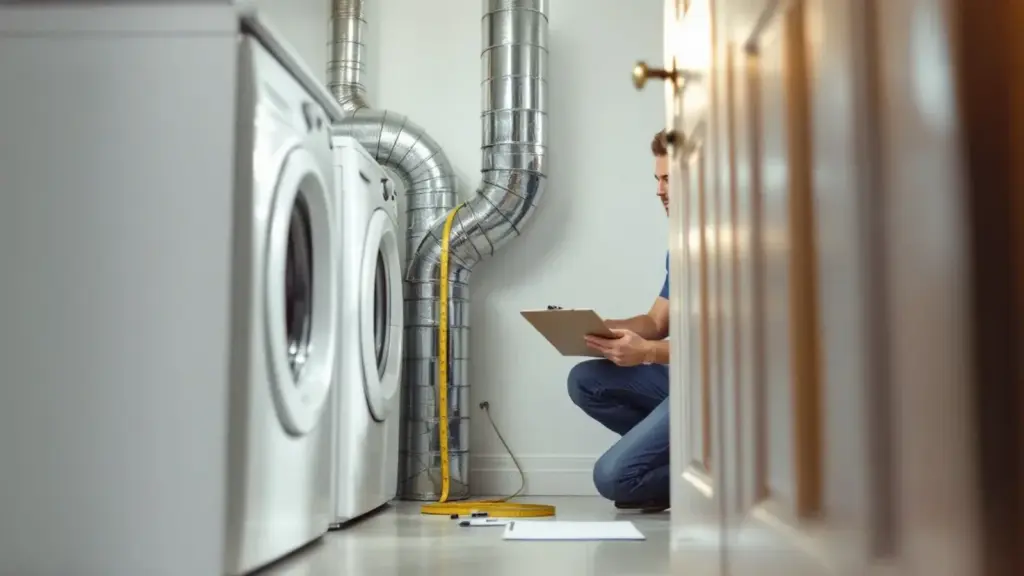
Understanding Dryer Vent Cleaning Cost Factors in St. Petersburg, FL
You pull a warm load of laundry from the dryer and notice the towels are still damp after a full cycle. You check the back of the machine and feel barely any airflow at the exhaust. That moment, right there, is when most St. Petersburg homeowners start wondering what a professional dryer duct cleaning actually costs, and why one quote might look so different from another. This guide walks you through exactly what shapes the price, so you can evaluate any estimate with confidence and avoid surprises on service day.
Before diving into the step-by-step breakdown, it helps to understand the full scope of what a thorough cleaning involves. Our dryer vent cleaning service guide covers the complete process and timeline so you know what a technician should actually be doing during the visit.
Before You Start: What to Know About Dryer Vent Pricing in St. Pete
Dryer vent cleaning is not a one-size-fits-all service. In St. Petersburg specifically, the wide variety of housing stock, from 1950s block homes in Kenwood and Disston Heights to newer townhomes near the waterfront, means duct configurations vary enormously from one property to the next. A technician cannot give an accurate quote without knowing a few key details about your specific setup. Here is what you should have on hand before calling:
- Approximate distance from the dryer to the exterior wall or roof exit
- Whether the duct exits through a wall, the soffit, or the roof
- The number of elbows or direction changes in the run
- The type of duct material (rigid metal, semi-rigid aluminum, or flexible foil/vinyl)
- When the duct was last cleaned, if ever
- Whether a booster fan is installed anywhere along the run
- Whether the dryer is gas or electric (affects access and safety steps)
Having this information ready helps a technician give you a more precise estimate upfront, which is exactly the kind of transparency you should expect from any reputable provider.
Step 1: Measure the Total Duct Length
Duct length is the single biggest driver of cleaning time and, by extension, cost. A short, straight run of six to eight feet from a laundry closet to an exterior wall is straightforward and quick to clear. A run that travels across a garage, turns through a utility room, and exits forty feet away through the soffit requires significantly more time and equipment reach.
In St. Petersburg’s older neighborhoods, laundry rooms were often added as afterthoughts to homes originally built without them. That can mean long, winding duct paths that were routed around existing walls and plumbing, adding footage that a homeowner might not even realize is there. Longer runs accumulate lint faster and require more thorough agitation to clear, so the cleaning effort scales with every additional foot of duct.
When comparing quotes, ask each provider how they measure the run and whether their base price covers a standard length, with additional footage billed separately. Knowing the answer prevents sticker shock after the job is done.
Step 2: Identify the Exit Point Location
Where the duct terminates on the exterior of your home has a direct impact on how difficult the cleaning will be. A wall exit at or near ground level is the easiest scenario. A soffit exit requires the technician to work at a slight height but is still relatively accessible. A roof exit, however, is a different situation entirely.
Roof exits are more common in St. Petersburg condominiums and multi-story homes where interior wall routing is constrained. Cleaning from the roof requires additional safety equipment, more time, and in some cases a two-person crew. That additional labor is a legitimate cost factor, and any quote that accounts for a roof exit will reasonably reflect it.
It is also worth noting that roof exits in Florida’s climate are more prone to cap damage from UV exposure and moisture, which can restrict airflow even after a cleaning. A good technician will inspect the cap and let you know if it needs attention. For more on how St. Petersburg’s humidity affects duct performance, see our guide to humidity-related duct blockage symptoms.
Step 3: Count the Elbows and Direction Changes
If you want it handled correctly the first time, consider professional dryer vent cleaning cost st petersburg in Petersburg 33709.
Every elbow, or 90-degree bend, in a dryer duct run adds resistance to airflow and creates a surface where lint accumulates faster. Industry standards treat each elbow as equivalent to several additional feet of straight duct when calculating the effective length of a run. A duct with four or five elbows may have a physical length of twenty feet but behave aerodynamically like a much longer run.
More elbows also mean more places where a cleaning brush or air whip needs to slow down, change angle, and work the lint free from the interior wall. That takes more time. When a technician walks through your home and counts bends before quoting, that is not padding the estimate, it is doing the job accurately.
If your home has an unusually high number of direction changes, it may also be worth discussing whether any part of the routing could be simplified during a future renovation. Straighter runs are easier to clean and less prone to buildup, which can reduce long-term maintenance frequency.
Step 4: Assess the Duct Material
The material your dryer duct is made from affects both how lint accumulates inside it and how it must be cleaned. Rigid galvanized steel or aluminum duct has smooth interior walls that lint slides along more easily and that a rotary brush can move through without risk of damage. Semi-rigid aluminum is also acceptable and cleanable, though the corrugated interior creates slightly more surface area for lint to grip.
Flexible foil or plastic vinyl duct is a different matter. These materials are not recommended for dryer exhaust by most building codes because their accordion-style interior traps lint aggressively and can collapse or kink over time. When a technician finds flexible duct, especially if it is long or has been compressed behind a wall, the cleaning process takes longer and the results may be less complete. In some cases, the technician may recommend replacing a section before or after cleaning, which is a separate cost to factor in.
If your home has older flexible duct, reviewing the differences between DIY and professional cleaning approaches can help you understand why that material type makes professional service especially important.
Step 5: Factor in Lint Buildup Severity
A duct that was last cleaned eighteen months ago and serves a household that does four loads per week will be in a very different condition than one that has never been cleaned in a decade. Heavy buildup requires more passes with cleaning equipment, more time at each elbow, and sometimes a secondary inspection with a camera to confirm the duct is fully clear.
In St. Petersburg, the combination of high humidity and warm temperatures year-round means many households run their dryers more frequently than those in cooler climates, simply because outdoor drying is impractical during rainy season. That higher usage rate accelerates lint accumulation. Homes with large families, pets that shed heavily, or occupants who use high-heat drying cycles tend to see buildup faster than average.
Severely blocked ducts may also require a pre-cleaning inspection with a video scope to understand what is inside before the technician begins. That step adds time but protects against pushing a dense clog further into the duct rather than extracting it. The full service process walkthrough explains how that inspection step fits into a professional cleaning visit.
Step 6: Check for a Booster Fan
Some St. Petersburg homes, particularly condominiums and townhomes with long interior duct runs, have an inline booster fan installed to help push exhaust air the full distance to the exterior. These fans are a practical solution for runs that exceed the maximum recommended length, but they add a layer of complexity to the cleaning process.
A booster fan must be disconnected before cleaning equipment can pass through the duct, and the fan housing itself needs to be cleaned separately, as lint accumulates on the blades and motor housing over time. Reconnecting and testing the fan after cleaning adds time to the service call. If the fan has not been serviced in several years, the technician may also identify worn components that affect its performance, which is useful information even if repair falls outside the cleaning scope.
Many Petersburg 33709 homeowners rely on expert dryer vent cleaning cost st petersburg in Petersburg 33709 for exactly this.
If you are unsure whether your home has a booster fan, check along the duct run in accessible spaces like the attic, garage, or utility closet. A cylindrical in-line unit with its own power connection is the telltale sign.
Step 7: Consider Access Difficulty
Even a short duct run can be more labor-intensive if the access points are difficult to reach. A dryer tucked into a narrow closet with no room to maneuver equipment, a duct that passes through a finished wall with no cleanout port, or an attic access point that requires moving stored items all add time to the service visit.
St. Petersburg’s older concrete block homes sometimes have duct paths that were routed through the block itself or through tight utility chases that were not designed with future maintenance in mind. In those situations, a technician may need to work from both the dryer end and the exterior exit simultaneously, which can require two people or specialized flexible equipment.
When scheduling a cleaning, describe your laundry room setup as accurately as you can. A good technician will ask follow-up questions specifically to identify access challenges before arriving, so the visit goes smoothly for both sides.
Step 8: Understand What Is (and Is Not) Included in the Quote
Once you have a quote in hand, it is worth asking a few clarifying questions to confirm exactly what the price covers. Some providers include a post-cleaning airflow test as standard; others treat it as an add-on. Some include cleaning the exterior cap or vent cover; others do not. Knowing the scope prevents confusion about what you are actually paying for.
Questions worth asking before you book:
- Does the quote include cleaning the exterior vent cap and checking its condition?
- Is a post-cleaning airflow measurement or performance check included?
- If the duct is found to be more severely blocked than expected, how is additional time handled?
- Is a video inspection included, or is it available as an add-on?
- What happens if a section of duct is found to be damaged or disconnected during the cleaning?
For a broader checklist of what to look for when evaluating any dryer vent cleaning provider in St. Petersburg, our guide to choosing a qualified local cleaner walks through the key questions in detail.
Step 9: Think About Cleaning Frequency Over Time
The total cost of maintaining a dryer duct is not just the price of a single cleaning. It is the cumulative cost over the life of the appliance, shaped by how often the duct needs attention. A household that understands its specific risk factors, duct length, usage rate, humidity exposure, can plan a cleaning schedule that prevents emergency situations and extends the life of the dryer itself.
In St. Petersburg, most households benefit from an annual cleaning as a baseline, with higher-use households or those with longer duct runs considering more frequent service. Waiting until visible symptoms appear, such as longer drying times, a burning smell, or excessive heat on the exterior of the machine, typically means the duct is already significantly restricted. At that point, the cleaning is more involved and the dryer has likely been working harder than it should for some time.
Lint buildup is also a fire risk that compounds over time. For a deeper look at how that risk plays out locally, our dryer lint fire prevention guide for St. Petersburg homes explains the specific conditions that make regular cleaning a safety priority, not just a maintenance convenience.
Ready for the next step? Learn how dryer vent cleaning cost st petersburg services in Petersburg 33709 can help and reach out to the team.
When to Call a Professional in St. Petersburg
Some aspects of dryer vent maintenance are reasonable for a homeowner to handle, such as cleaning the lint trap after every load, pulling the dryer away from the wall periodically to check for kinks in the duct connection, or clearing visible debris from the exterior vent cap. But the internal cleaning of the duct run itself is work that benefits from professional equipment and experience, particularly in St. Petersburg where duct configurations are often more complex than they appear from the outside.
Call a professional when you notice any of the following:
- Clothes taking more than one cycle to dry fully
- The dryer cabinet feeling unusually hot to the touch during operation
- A burning or musty smell during or after a drying cycle
- Visible lint accumulation around the exterior vent cap
- It has been more than a year since the last professional cleaning
- You have recently moved into a home and do not know the duct’s service history
Ecovent Dryer Duct Solutions serves St. Petersburg and the surrounding area with professional dryer duct cleaning built around the specific configurations found in local homes. If any of the cost factors above apply to your property, reach out for a straightforward assessment and an upfront quote before service begins.
Frequently Asked Questions
Does a longer duct always mean a higher cleaning cost?
Generally, yes. Longer runs require more time and equipment reach to clean thoroughly. The relationship is not always strictly linear, since a straight long run can sometimes be easier than a short run with many elbows, but total duct length is consistently one of the primary factors technicians use when estimating a job.
Why does a roof exit cost more to clean than a wall exit?
Roof exits require the technician to work at height with appropriate safety equipment, which adds time and sometimes requires a second crew member. The exterior cap on a roof exit is also harder to inspect and clean than a wall-mounted cap, and in Florida’s climate, UV and moisture damage to roof caps is common and worth checking during every service visit.
Can I reduce my cleaning costs by cleaning the duct myself between professional visits?
Light maintenance, such as keeping the lint trap clean and checking the exterior cap for obstructions, is always worthwhile. However, consumer-grade brush kits do not reach deep into long or multi-elbow duct runs the way professional rotary equipment does, and improper technique can push lint deeper into the duct or damage flexible sections. Professional cleaning at appropriate intervals remains the most reliable way to keep the duct fully clear.
What is the most common reason quotes vary so much between providers?
Scope differences are the most frequent cause. One quote may include an airflow test, exterior cap cleaning, and a post-service inspection while another covers only the basic brush-out. Always ask for a written breakdown of what each quote includes so you are comparing equivalent services rather than just headline prices.
How does St. Petersburg’s humidity affect how often I need a cleaning?
High ambient humidity can cause lint inside the duct to clump and compact more readily than in drier climates, potentially accelerating blockage between cleanings. Households near the water or in areas with frequent coastal moisture may find that their ducts reach a restricted state faster than the general annual guideline suggests. Monitoring drying performance over time is the most practical way to calibrate your specific cleaning interval.
The Bottom Line on Dryer Vent Cleaning Costs in St. Petersburg
Pricing for dryer duct cleaning is not arbitrary. Every factor that makes a job more complex, a longer run, a roof exit, more elbows, heavier buildup, a booster fan, difficult access, reflects real additional time and effort. Understanding those drivers puts you in a much better position to evaluate any quote you receive and to ask the right questions before committing to a service.
If you are ready to schedule a cleaning or want to talk through what your specific setup might involve, contact Ecovent Dryer Duct Solutions for a straightforward conversation about your St. Petersburg home’s duct configuration. And if you want to see exactly what happens during a professional visit from start to finish, the complete dryer vent cleaning process guide walks through every step in detail.