
7 Key Differences Between DIY and Professional Clothes Dryer Vent Cleaning in St. Petersburg
Most homeowners assume a brush kit from the hardware store does the same job as a professional service. In many parts of the country, that assumption is at least debatable. In St. Petersburg, FL, it rarely holds up. Between the city’s high ambient humidity, the long or rerouted duct runs common in older Pinellas County homes, and the heat that Florida dryers already work against, the gap between a DIY clean and a professional one is wider than most people expect. Here are seven concrete differences worth understanding before you decide.
1. Equipment Reach vs. Duct Length
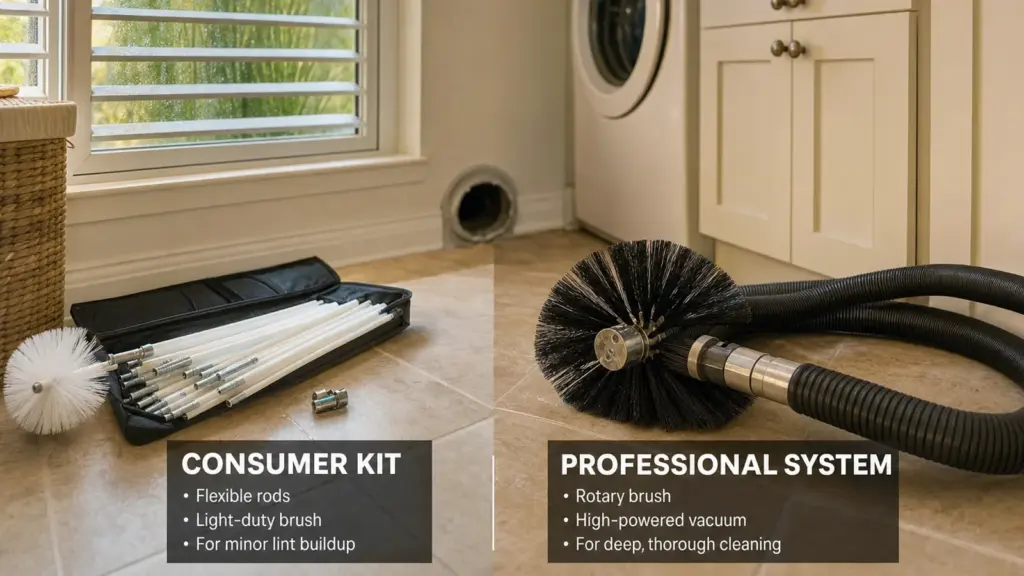
Consumer brush kits typically connect flexible rods in sections to extend through a duct. The problem is that most kits max out somewhere between twelve and twenty feet of reach, and they rely on manual rotation rather than mechanical torque. Many St. Petersburg homes, particularly the mid-century block construction common in neighborhoods like Disston Heights and Kenwood, have dryers positioned far from an exterior wall. Duct runs in these layouts can exceed twenty-five feet before any elbows are counted. A professional service uses rotary brush systems driven by variable-speed motors, paired with high-CFM vacuum extraction, so the cleaning action reaches the full length of the duct rather than just the section closest to the dryer.
2. How Lint Is Actually Removed (Not Just Pushed)
This is the difference that matters most for fire risk. A manual brush dislodges lint from duct walls, but without simultaneous negative-pressure extraction, that loosened material has to go somewhere. Some of it exits at the exterior termination cap, but a meaningful portion settles deeper in the duct, collects at elbows, or gets pushed back toward the dryer’s heating element. Professional equipment applies vacuum suction at the dryer end while the brush works through from the other direction, so loosened lint is captured rather than redistributed. For context on why that redistribution matters, see lint fire prevention in St. Petersburg.
3. St. Petersburg’s Humidity and What It Does to Lint
If you want it handled correctly the first time, consider professional dryer vent cleaning cost st petersburg in Petersburg 33709.
This is the locale-specific item that changes the equation for Pinellas County homeowners. St. Petersburg averages humidity levels above 70% for much of the year, and the Gulf Coast’s warm, moist air means dryer exhaust condenses more readily inside duct walls than it does in drier climates. That condensation causes lint to clump and stick rather than remaining loose and easily brushed. Homeowners often notice their dryers running longer than usual or clothes feeling damp after a full cycle, which are classic signs of restricted airflow. You can read more about those warning signs at humidity-related vent blockage symptoms. Stuck, matted lint does not respond well to a flexible rod and brush. It requires the combination of mechanical agitation and extraction pressure that professional equipment provides.
4. Inspection and Documentation
A DIY cleaning is essentially blind. You push the brush through, pull it back, and hope the duct is clear. Professional services include a pre- and post-cleaning assessment, which typically involves checking airflow with a pressure gauge or anemometer, inspecting the exterior termination cap for damage or pest intrusion, and noting any crushed, kinked, or improperly connected duct sections. That documentation matters because a partially crushed flex duct behind a wall will keep restricting airflow no matter how many times the lint is removed. Catching it during a cleaning visit avoids repeat calls and gives the homeowner an accurate picture of the duct’s condition. Our dryer vent cleaning service process covers exactly what that inspection involves at each stage of the appointment.
5. Handling Elbows, Offsets, and Booster Fan Sections
Flexible brush rods follow a straight path reasonably well, but they struggle at tight elbows and tend to skip across the inside of a sweeping turn rather than scrubbing it. Lint accumulates most heavily at exactly those transition points, where airflow slows and particulates drop out of suspension. Professional rotary systems use purpose-built brush heads sized for the duct diameter, and technicians adjust technique at each elbow to maintain contact with the duct wall through the curve. Homes with long runs that include booster fans present an additional complication: the fan housing itself collects lint on the impeller blades, and cleaning around or through the fan requires a different approach than a simple straight run. If your St. Petersburg home has one of these extended duct configurations, the considerations are different enough to warrant a separate look at the specifics.
Many Petersburg 33709 homeowners rely on expert dryer vent cleaning cost st petersburg in Petersburg 33709 for exactly this.
6. Safety Around the Dryer Cabinet and Connection Point
The section of duct immediately behind the dryer, including the transition hose that connects the appliance to the wall duct, is where the highest concentration of lint typically builds. It is also where the heat source is closest. Disconnecting the dryer safely, inspecting the transition hose for foil accordion material (which should be replaced with rigid or semi-rigid metal per current guidance), and reconnecting everything correctly requires some familiarity with gas or electric appliance connections. For gas dryers, reconnecting the flexible gas line and confirming there are no leaks is not a step to skip or rush. This is one area where the instruction to call a licensed professional is not just a formality. A technician who services dryer vents regularly handles this connection point on every appointment and knows what a proper seal looks and tests like.
7. What Happens When a Problem Is Found Mid-Job
A DIY cleaning has a fixed outcome: you clean what you can reach and move on. A professional visit has a different decision tree. If the technician finds a disconnected duct section inside the wall cavity, a bird nest at the exterior cap, a termination flap that has been painted shut, or a length of prohibited flexible plastic duct still in place from a previous owner’s installation, the job shifts from routine cleaning to a repair or replacement conversation. Having that discovery happen during a scheduled service call, rather than after a dryer fire or a carbon monoxide concern, is the practical value of professional eyes on the system. For guidance on what to ask a technician before booking, choosing a dryer vent cleaner in St. Petersburg walks through the right questions. And if you are weighing what different service scopes typically involve in terms of cost drivers, what affects dryer vent cleaning costs explains the variables without any guesswork.
Frequently Asked Questions
Ready for the next step? Learn how dryer vent cleaning cost st petersburg services in Petersburg 33709 can help and reach out to the team.
Can a DIY kit work for a short, straight duct run?
For a very short, straight run of eight feet or less with no elbows and a clear exterior termination, a quality brush kit can remove surface lint reasonably well. The limitation is that even short runs in St. Petersburg accumulate moisture-clumped lint faster than those in drier climates, so the cleaning interval needs to be shorter and the results should be verified with an airflow check, which consumer kits do not include.
How do I know if my duct run is too long for a DIY clean?
Measure the distance from the dryer to the exterior wall and add roughly two and a half feet of equivalent length for each elbow in the run. If that total exceeds fifteen to eighteen feet, most consumer rod kits will not maintain enough brush pressure at the far end to clean effectively. A professional assessment can confirm the actual duct layout, including any sections that run through walls or ceilings where the path is not visible.
How often should clothes dryer vent cleaning happen in St. Petersburg?
Most households benefit from annual professional cleaning, but St. Petersburg’s humidity and the lint-clumping it causes mean some homes need attention more frequently, particularly those with large families, pets, or dryers that run multiple loads per day. Signs that a cleaning is overdue include cycle times increasing noticeably, the laundry area feeling warmer than usual during a cycle, or the exterior vent cap not opening fully during operation.
The Bottom Line for St. Petersburg Homeowners
DIY maintenance has a place: clearing the lint trap after every load, periodically pulling the dryer out to vacuum behind it, and checking that the exterior cap opens freely are all reasonable homeowner tasks. The full duct cleaning, especially in a city where humidity, older housing stock, and long duct runs combine to create more demanding conditions, is where professional equipment and trained eyes consistently produce better results. When you are ready to schedule a professional clothes dryer vent cleaning for your St. Petersburg home, our full-service dryer duct cleaning covers the complete process from arrival to verification.