
Why St. Petersburg Humidity Causes Fast Lint Buildup in Dryer Vents
Dryer fires account for thousands of residential incidents across the U.S. each year, and the leading physical cause is lint accumulation inside the vent system. In St. Petersburg, FL, that risk is compounded by something most homeowners overlook: the city’s persistently high coastal humidity, which causes lint to behave very differently than it does in drier inland climates. If your dryer feels sluggish or your laundry room stays warm long after a cycle ends, the Pinellas County air itself may be part of the reason.
How does humidity actually affect lint inside a dryer vent?
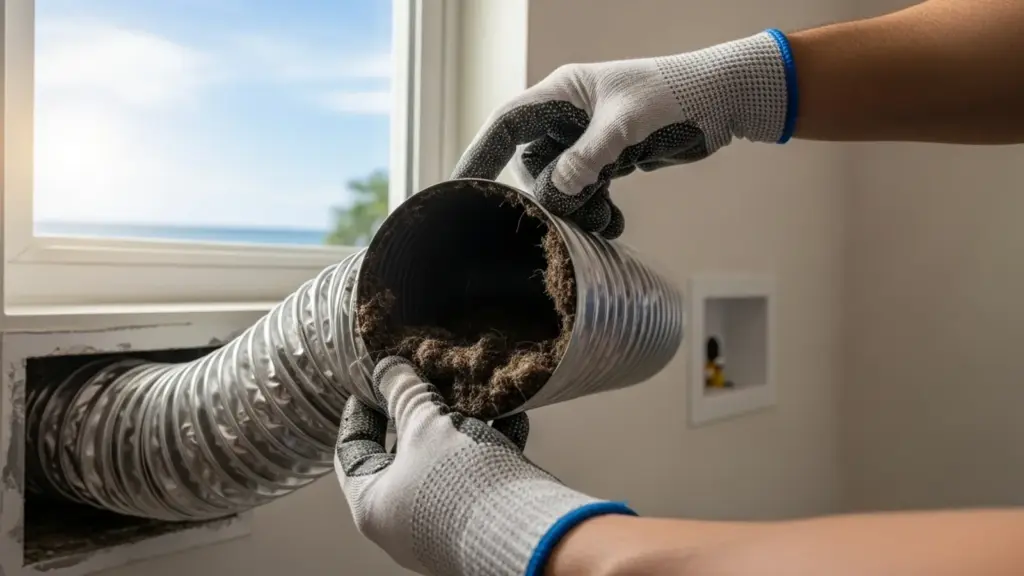
Lint is made of tiny fiber particles shed from clothing during the tumbling cycle. In a dry climate, those particles stay loose and airy, moving through the vent duct relatively easily with the exhaust airflow. In a humid environment like St. Petersburg, moisture in the surrounding air and in the exhaust stream causes those fibers to absorb water and clump together. The result is a denser, stickier mass that clings to duct walls rather than passing through. Over time, each layer of clumped lint narrows the duct’s interior diameter, restricting airflow more aggressively than the same volume of dry lint would in a less humid region.
Why is St. Petersburg’s climate particularly hard on dryer vents?
St. Petersburg sits on a peninsula between Tampa Bay and the Gulf of Mexico, which keeps relative humidity elevated for most of the year. Summer afternoons regularly push humidity above 80 percent, and even the mild winters rarely allow the air to fully dry out. When warm, moist exhaust air exits the dryer and travels through a duct that passes through an air-conditioned wall or attic space, the temperature difference can cause condensation to form inside the duct itself. That condensation saturates any lint already resting on the duct walls, compressing it into a paste-like layer. Homes in coastal neighborhoods such as Gulfport, Shore Acres, and Snell Isle are especially susceptible because they sit closer to open water where ambient moisture is highest.
Does the age or construction style of St. Petersburg homes make this worse?
If you want it handled correctly the first time, consider professional breathe easy with professional dryer vent cleaning in Petersburg 33709.
Much of St. Petersburg’s residential housing stock was built between the 1950s and 1980s, when flexible foil or plastic accordion-style duct was the standard material for dryer exhaust runs. Those corrugated ducts have ridged interiors that catch lint particles far more readily than smooth rigid metal duct. Combine that surface texture with humid coastal air and you have a system that accumulates blockages faster than modern rigid duct installations. Older homes in neighborhoods like Kenwood, Historic Old Northeast, and Euclid-St. Paul often have longer vent runs with multiple bends, which slows exhaust velocity and gives moist lint even more time to settle and adhere before it exits the building.
What are the safety risks when lint buildup accelerates?
A partially blocked vent forces the dryer’s heating element to run longer and hotter to compensate for reduced airflow. That sustained heat, combined with a lint mass that is already partially dried by each cycle, creates conditions where ignition becomes a genuine concern. Beyond fire risk, restricted airflow pushes heat back into the drum, stressing internal components and shortening the appliance’s useful life. Carbon monoxide is an additional concern for gas dryers: if exhaust cannot exit properly, combustion byproducts can back-draft into the living space. For a deeper look at the specific warning signs your vent may already be compromised, see how to recognize a clogged dryer vent in St. Petersburg.
How often should St. Petersburg homeowners schedule vent cleaning?
The general industry guidance suggests cleaning dryer vents at least once per year for an average household. In St. Petersburg, the combination of high humidity, older corrugated ductwork, and longer vent runs common in mid-century homes often warrants cleaning every six to nine months. Households that do more laundry than average, run high-lint fabrics like towels and fleece regularly, or have pets that shed heavily may need service even more frequently. Rather than guessing, pay attention to how your dryer is performing: drying times that creep longer cycle by cycle are a reliable indicator that lint accumulation is already reducing airflow, regardless of when the last cleaning occurred.
Many Petersburg 33709 homeowners rely on expert breathe easy with professional dryer vent cleaning in Petersburg 33709 for exactly this.
Can a homeowner in St. Petersburg clean their own dryer vent?
Clearing the lint trap before every load is something every homeowner should do, and occasionally wiping down the trap housing is a sensible light-maintenance step. However, the deeper duct run, which can extend ten feet or considerably more through walls and attic spaces, requires rotary brush equipment and a high-powered vacuum to clean thoroughly. In St. Petersburg’s humid conditions, the compacted, moisture-laden lint that accumulates in those ducts does not dislodge with a standard household vacuum or a basic brush kit. Attempting to push that material without proper suction often redistributes the clog rather than removing it. For a balanced look at where homeowner maintenance ends and professional service begins, DIY versus professional dryer vent cleaning covers the distinction in detail.
What should a thorough dryer vent cleaning service include in a humid climate?
A cleaning that accounts for St. Petersburg’s conditions should involve more than a single pass with a brush. The technician should inspect the full duct run for condensation damage, disconnected joints, or sections of corrugated flex duct that have collapsed inward, since all three are more common here than in drier regions. The exterior vent cap deserves particular attention: coastal salt air accelerates corrosion on metal flaps, and a cap that no longer closes fully allows humid outdoor air to enter the duct between cycles, keeping the interior moist and promoting faster lint adhesion. The cleaning itself should use a contact-vacuum method that captures debris at the point of agitation rather than allowing it to settle elsewhere in the system. When you are ready to find a qualified provider, choosing a reliable dryer vent cleaning service in St. Petersburg walks through exactly what to look for.
Ready for the next step? Learn how breathe easy with professional dryer vent cleaning services in Petersburg 33709 can help and reach out to the team.
How does lint buildup connect to energy costs in St. Petersburg homes?
Florida homeowners already run air conditioning for much of the year, and a dryer that runs two or three extra cycles per week because airflow is restricted adds a measurable load to the household energy bill. The heat that cannot exit through a blocked vent also radiates into the laundry room, which can cause the nearby air conditioning system to work harder to maintain comfort. Keeping the vent clear is one of the more straightforward ways to prevent that compounding effect. If you are weighing the cost of professional service against the ongoing expense of inefficient drying, what drives dryer vent cleaning costs breaks down the factors that influence service pricing without getting into specific figures.
What can St. Petersburg homeowners do between professional cleanings?
Between scheduled service visits, a few simple habits help slow the rate of lint accumulation in a humid climate. Cleaning the lint screen before every load is the single most effective step, since a clogged screen forces more fiber into the duct. Checking the exterior vent cap every few months to confirm the flap opens freely and closes completely keeps outdoor moisture from entering the system. If the duct run includes any flexible sections visible in a utility closet or crawl space, a visual check for kinks or sags is worthwhile, since those low points collect moisture and lint together. None of these steps replace professional cleaning, but they reduce how quickly a freshly cleaned duct returns to a restricted state in St. Petersburg’s persistent humidity.
St. Petersburg’s coastal climate is one of its most appealing qualities, but it does create maintenance demands that homeowners in drier parts of the country rarely encounter. Lint that might stay loose and manageable elsewhere becomes a compacted, moisture-laden obstruction here, and the older housing stock throughout Pinellas County adds duct designs that compound the problem. Staying on a realistic cleaning schedule and knowing what a thorough service should include are the two most practical steps any local homeowner can take. When you are ready to schedule that service, a qualified dryer vent cleaning professional in St. Petersburg can help you identify what to ask and what to expect.